
The Christmas Story We Think We Know
Every Christmas morning growing up, my family would gather in the living room before a single gift was opened. My dad would read the story of Jesus’ birth (something we do to this day) and then pray a very, very long prayer while we kids squirmed, desperate to get to the presents. Even though my thoughts were on the gifts, I knew the Christmas story was unlike any other.
Think about it: a pregnant teenage girl, a confused but obedient fiancé, angels filling the sky, God Himself arriving in a barn and a group of scruffy, socially awkward shepherds becoming the first to hear about it. It’s strange. It’s messy. It’s nothing like the polished nativity scenes we display.
And just in case you’re wondering the Wise Men who brought gold, frankincense, and myrrh? They showed up about two years later. So let’s put them back in their lane for now.
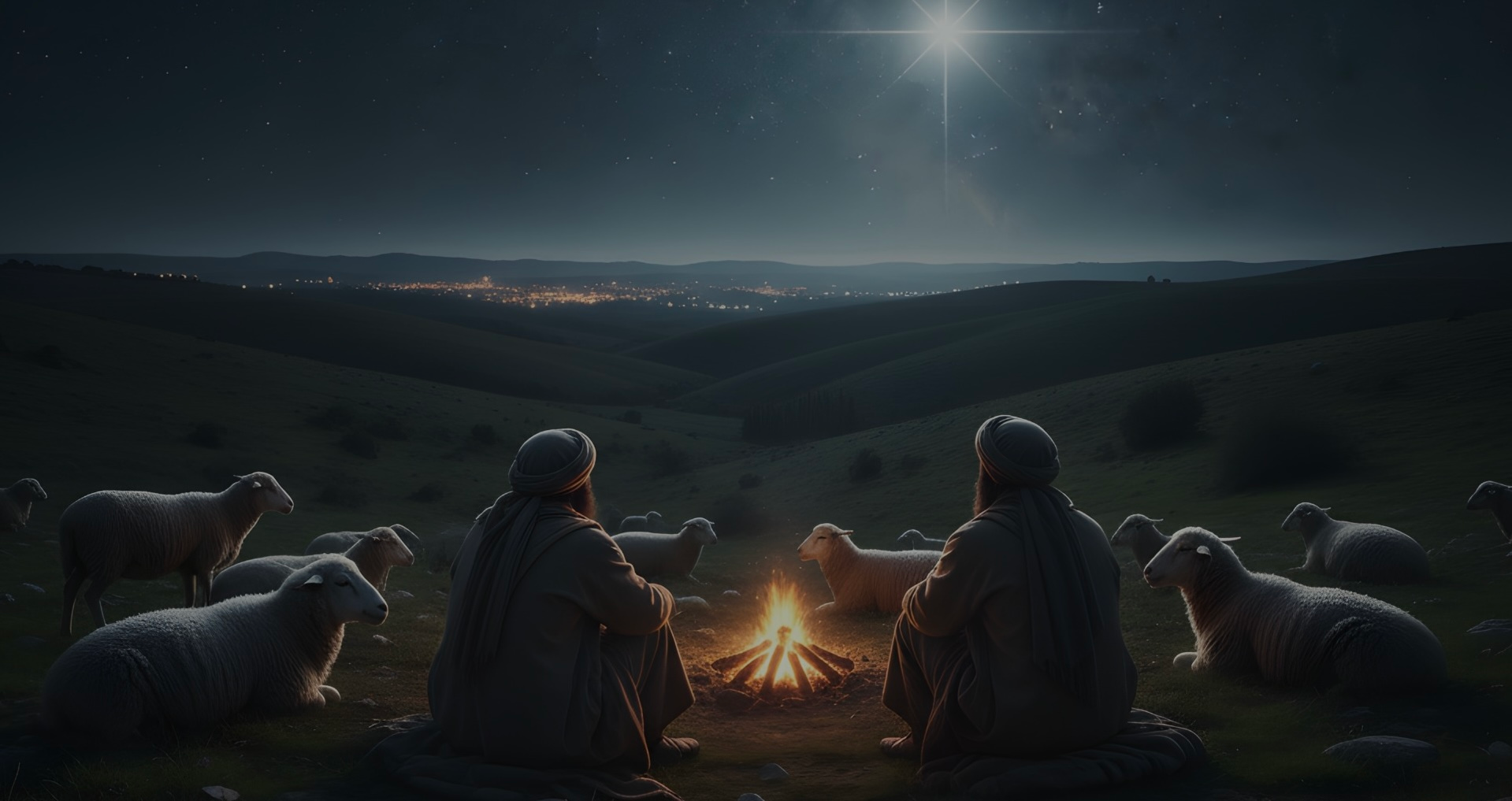
Today, I want to talk about the shepherds, the least expected, least qualified, least impressive group of people God could have chosen for the greatest announcement the world has ever heard.
The Shepherds: The Most Unlikely Guests
It’s fascinating that the only birth announcement God personally delivered through angels no less went to a group of religious and social outcasts. Luke 1:30–33
Who were these men?
1. Religious Outcasts
They were considered unclean. Their work kept them from participating in the feasts and holy days that shaped Jewish life. Not because they didn’t care but because someone had to stay with the sheep.
2. Social Outcasts
Shepherds were nomadic. People didn’t trust them. If something went missing, the assumption was, “It was probably those shepherds.”
3. Considered Unreliable
They weren’t even allowed to testify in court. Their word held no weight.
4. Deeply Isolated
They lived outside, slept beside the sheep, defended them from predators, and rarely interacted with people. Imagine the modern-day equivalent someone who lives online, never leaves their house, and only talks to their dog.
This was not a glamorous or respected job. And yet God chose them first.
If You Were God Would You Choose Shepherds?
Imagine being God (which we can’t, but let’s try). You are announcing the most important moment in human history the arrival of your Son, the Savior of the world. Who gets the first invitation?
Royalty?
High priests?
Political leaders?
Military commanders?
Wealthy merchants?
Influential rabbis?
No.
None of them.
The sky did not open above Jerusalem’s palace. Angels did not appear in the temple. The Sanhedrin received no divine memo.
Instead, heaven exploded in song over a dark field where a handful of overlooked men were keeping watch in the night.
Why?
God Was Making a Statement
From His very first breath on earth, Jesus made something crystal clear: He does not value what the world values.
God was saying…
1. “My love does not discriminate.”
Class, wealth, status, none of it moves Him.
2. “I come for everyone.”
Jesus Himself took the lowest place. Born in a barn. Laid in a feeding trough. The King of Glory… in a manger.
3. “I show no favoritism.”
Every person, shepherd or king, comes to Him on the same basis: faith in Christ alone.
4. “In My kingdom, humility is greatness.”
The way up is down. The path to glory starts in a stable.
Jesus embodied this throughout His ministry:
- He called Himself the Good Shepherd (John 10:11), identifying with the very outcasts He welcomed.
- He spoke to the Samaritan woman at the well (another outcast).
- He ate with sinners and tax collectors.
- He chose young, uneducated men as His disciples.
- He allowed a sinful woman to anoint Him for burial.
- He appeared first to women at the tomb whose testimony wasn’t even considered valid culturally.
Every time, Jesus was making a statement.
He flips the earthly kingdom upside down.
He values what the world despises.
He exalts the humble.
The Incarnation: God’s Loudest “I Love You”
In this strange yet breathtaking Christmas story: God becomes man. The theological word is Incarnation, but its meaning is simple and stunning:
God stooped low.
God came near.
God came for us.
Philippians 2:5–11 tells us He set aside His privileges, made Himself nothing, took the form of a servant, and obeyed to the point of death on a cross.
Why?
Love.
Always love.
With a megaphone, Christmas declares:
“I LOVE YOU.”
“I left heaven for you.”
“I took the lowest position for you.”
“I carried your sin for you.”
“I gave my life so you could become whole, free, and fully alive.”
The Shepherds remind us that Jesus came for:
- the broken
- the overlooked
- the confused
- the messy
- the religiously disqualified
- the socially misunderstood
- the ones who look put-together
- and the ones who feel far from it
In other words… He came for all of us.
What Christmas Is Really All About
Christmas is not about perfection.
It’s not about gifts, traditions, or cozy moments.
It’s not even about snow or beautiful nativity scenes.
It’s about a God who came low so He could lift us high.
A God who stepped into the dirt, the noise, the brokenness and said:
“I choose you.”
From His birth to His resurrection, Jesus made sure the world knew:
Every person matters.
Every heart counts.
Every life is worth redeeming.
This is Christmas.
Leave a Reply