
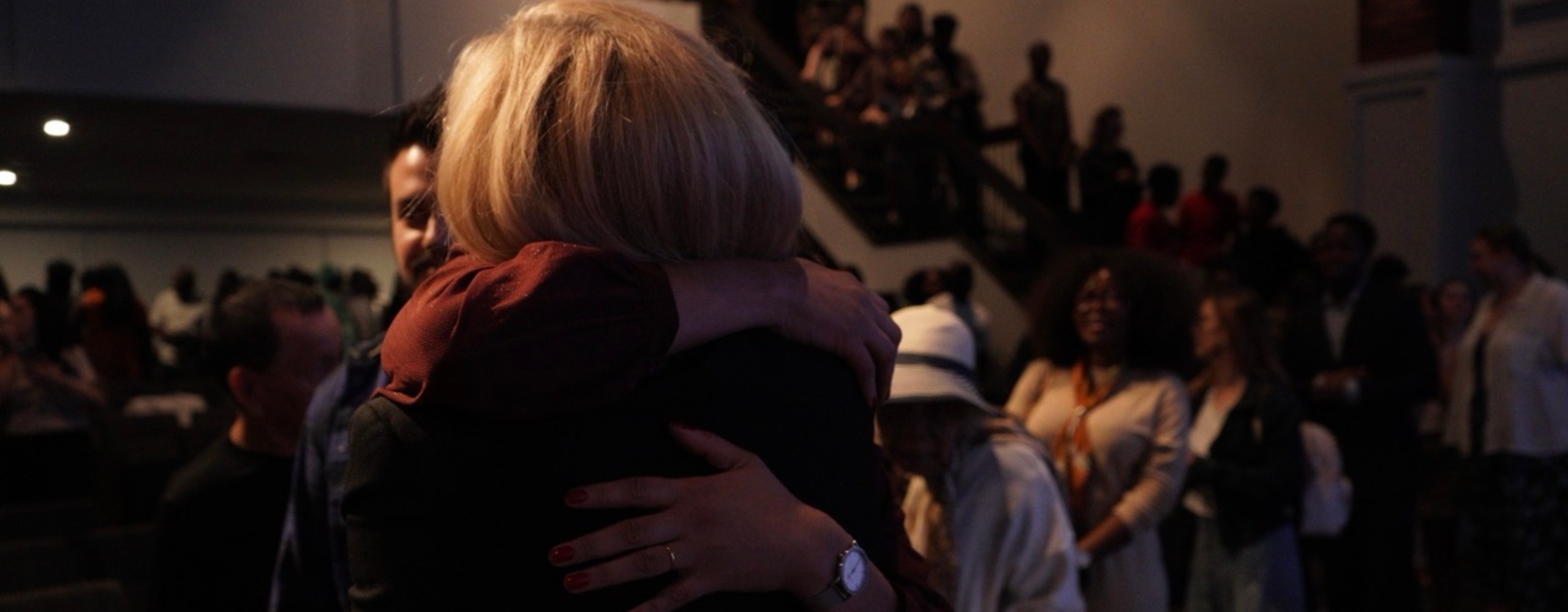
Imagine a New Home for Them
“The foreigner residing among you must be treated as your native-born. Love them as yourself.” Leviticus 19:34
There is something deeply unsettling about being the outsider.
Over the years, Peter and I have lived in three different countries. We moved from Canada to Thailand (10.5 years) , spent two years in England, and now find ourselves building a life in Australia. Every move brought excitement, adventure, and opportunity, but it also brought something else an unexpected lesson in what it feels like to be a stranger.
Of all our moves, Thailand was by far the greatest cultural adjustment. We arrived eager to learn, excited about the adventure, and ready to embrace a completely different way of life. But it didn’t take long to realize that no amount of education, experience, or ministry preparation could instantly teach us how to navigate another culture. We found ourselves asking basic questions, making mistakes, and discovering customs and social expectations that were completely unfamiliar to us.
And the funny thing is, even after 10½ years, we were still learning.
I remember running a 10K race in Bangkok when I noticed a group of people gathered across the road. They were looking toward someone who seemed to be attracting a lot of attention. Curious, I turned to someone nearby and asked, “Who is that person over there?” As I pointed toward them, the person beside me gasped and quickly told me, “You never point at royalty!”
I had no idea the person was royalty. And after 10½ years in Thailand, I still didn’t know what the appropriate response was in that situation!
I apologized, embarrassed by my mistake, and was reminded once again just how much there is to learn when you live in another culture.
Being a foreigner has a way of humbling you. In Thailand you are reminded of that reality every day – people call you “Farang” which means foreigner.
You may have years of experience, professional qualifications, and a wealth of life knowledge, but suddenly you’re unsure how to greet people, what is considered polite, or why everyone around you seems to understand something you don’t. You become aware that you are living by rules you haven’t yet learned.
More Than We Assume
One of the greatest misconceptions about newcomers is that because they don’t understand the culture, they somehow lack knowledge or capability. Nothing could be further from the truth. There can be an expectation that they need to learn it quickly – that is unrealistic.
Many newcomers are highly educated, speak many languages. They have raised families, led businesses, have held high positions in government, medicine, law, served in ministry, built careers, and overcome challenges we know nothing about. They may be deeply spiritual people who love Jesus wholeheartedly, pray, read the Word, and maybe even suffered for their faith. The issue is not intelligence or maturity. The issue is familiarity.
They simply haven’t lived in this culture long enough to understand all the unwritten rules. We know the customs and expectations of our own nations; newcomers don’t. They aren’t behaving badly they’re often simply unaware of how life works here. Like I was even after 10.5 years in Thailand.
I remember seeing a South Asian woman in Toronto’s airport find a spot and sit down in the middle of an aisle with what seemed like a mountain of luggage. People had to walk around her, and I could hear comments and see looks of irritation and disgust from those passing by. My heart went out to her.
You see, we live in a vast country with relatively few people. Space is something most Canadians take for granted. But in a country like India, where over a billion people share the same space, finding space can be a daily challenge. When you find an open spot, you take it. It’s not rude; it’s practical. It’s what you’ve learned to do.
That’s why it’s so important not to judge a person’s actions before understanding their story. What may appear inconsiderate through our cultural lens may make perfect sense through theirs.
This is where the way of Jesus calls us higher. Compassion. Mercy. Understanding. Patience. A willingness to help rather than criticize. A desire to understand rather than assume.
When we encounter someone who is different from us, Jesus invites us to see a person made in the image of God, not a problem to be solved or a behaviour to be corrected. He calls us to extend the same grace we would hope to receive if we were the stranger in a foreign land.
Disgust, rudeness, impatience, and anger may come naturally, but they are not the way of Jesus. The way of Jesus is to move toward people with kindness, to seek understanding before judgment, and to help the stranger feel seen, valued, and welcomed.
I think this is also an important reminder for those of us in the church. Sometimes we expect people to know things that seem obvious to us. We assume they understand our traditions, our language, and our way of doing things. Yet what feels normal to us may be completely foreign to someone else.
When Fear Gets in the Way
If we’re honest, one of the biggest barriers to welcoming newcomers isn’t usually hatred, it’s fear.
We tend to be comfortable with what is familiar. We understand people who look like us, speak like us, worship like us, and share our cultural experiences. But when someone is different, fear can quietly creep in.
Sometimes it’s the fear of saying the wrong thing. Sometimes it’s the discomfort of not knowing how to relate to someone whose experiences are very different from our own. Sometimes it’s fear fuelled by headlines, stories we’ve heard, stereotypes we’ve absorbed, or assumptions we’ve made about people from another nation, culture, or background. Sometimes it’s our own ethnocentrism “Ethnocentrism is the act of judging other cultures by the standards and values of your own culture. It often comes with the belief that your own ethnic group, nation, or culture is better, more normal, or superior to all others.”
And sometimes, if we’re honest, people fear that welcoming newcomers will somehow threaten the way of life they’ve always known. They worry that their traditions, values, or sense of familiarity will be lost.
But fear is a poor teacher.
Fear causes us to see people as categories rather than individuals. It encourages us to make judgments before we’ve heard a person’s story. It magnifies differences while ignoring the things we share as fellow human beings created in the image of God.
I’ve noticed this especially in online conversations. People can be quick to criticize those from other cultures, pointing out behaviours they dislike or differences they don’t understand. What often surprises me is the lack of awareness about the brokenness that exists within our own culture.
Every nation has strengths worth celebrating and weaknesses that need addressing. Every culture has beauty and every culture has flaws. Before we rush to condemn the shortcomings we perceive in others, perhaps we should take a long, honest look in the mirror. Human trafficking, domestic violence, addiction, greed, loneliness, racism, exploitation, and crime are not problems that belong to one nationality or ethnic group. They are evidence of a broken world and a fallen humanity.
Jesus never called us to compare sins or rank cultures. He called us to love our neighbour.
Humility reminds us that no nation, culture, or people group has it all figured out. Mercy reminds us that every person carries a story we do not know. And love compels us to move beyond fear and stereotypes so we can see people the way Christ sees them.
The question is not, “What’s wrong with their culture?” The better question is, “How can I reflect the love of Jesus to this person standing in front of me?” That is where understanding begins, and where strangers become neighbours.
The truth is that assumptions are poor substitutes for relationships.
When we take the time to listen, we often discover that the people we were uncertain about are not so different from us after all. I asked a taxi driver in India what was the most important things in his life. He told me, my faith and my family. I replied, “Me too.” They love their families. They want meaningful friendships. They carry hopes, disappointments, and dreams. Many have made enormous sacrifices to build a better future for their children.
Fear builds walls but love builds bridges.
As followers of Jesus, we are called to choose love.
The Apostle John reminds us, “There is no fear in love. But perfect love drives out fear” (1 John 4:18). When the love of Christ fills our hearts, it enables us to move toward people rather than away from them. It helps us replace assumptions with understanding and suspicion with compassion.
The Call to Compassion
Throughout Scripture, God repeatedly reminds His people to care for the foreigner.
Why? Because God knows what it feels like to be vulnerable. Jesus left the grandeur, worship and comfort and worship of heaven and then came to earth, was born in a stable, lived a simple life. He was then mocked, lied about, despised and killed. He was a stranger.
Again and again, He tells Israel to remember that they too were once strangers. Their own experience of being outsiders was meant to shape the way they treated others.
Exodus 22:21 says, “Do not mistreat or oppress a foreigner, for you were foreigners in Egypt.”
Leviticus goes even further, telling God’s people not merely to tolerate foreigners but to love them as themselves.
What a beautiful picture of the heart of God.
Jesus said this,
Matthew 25:35-40 “For I was hungry, and you fed me. I was thirsty, and you gave me a drink. I was a stranger, and you invited me into your home. I was naked, and you gave me clothing. I was sick, and you cared for me. I was in prison, and you visited me.’“Then these righteous ones will reply, ‘Lord, when did we ever see you hungry and feed you? Or thirsty and give you something to drink? Or a stranger and show you hospitality? Or naked and give you clothing? When did we ever see you sick or in prison and visit you?’“And the King will say, ‘I tell you the truth, when you did it to one of the least of these my brothers and sisters, you were doing it to me!’
Let’s ask questions before making assumptions. Let’s extend grace when someone doesn’t know the customs. Let’s show the kind of love that chooses patience over criticism.
Helping People Feel Seen
I wonder if one of the greatest ministries in the church today is simply helping people feel seen.
Many newcomers come carrying uncertainty. They wonder if they will fit in. They wonder if anyone will talk to them. They wonder if they will ever belong.
What a gift it is when someone notices.
What can we do?
- Ask questions. (ask about family, what brought them here, what do they miss, when did they become a believer, what was church like in their nation, ask how they are adjusting, what are the challenges, do they need any help with how to navigate life here etc)
- Give a warm smile.
- Have a genuine conversation.
- Offer an invitation for coffee.
- Tell them you’d love for them to sit with you at church.
- Give them a simple introduction to others.
- Invite them over for dinner. (ask what they miss about home and attempt to make it)
- Extend mercy and grace.
- Assume they are experienced, educated and beautiful people.
These may seem like small acts, but they can make all the difference in the world.
Often what people remember most about a church is not the sermon, the music, or the building. They remember how they were treated. They remember whether someone saw them.
Creating a Home
Jesus had a remarkable way of noticing people others overlooked. He saw the outsider standing at the edge of the crowd. He welcomed those who felt excluded. He made room for people who struggled to find their place.
As His followers, we are called to do the same. The next time you walk into church, take a moment to look around. Ask the Holy Spirit to help you see what He sees. You can do the same in your neighbourhood.
Perhaps the most Christlike thing we can do is help someone feel that they belong. Because every stranger carries a story. Every newcomer has value.
A Beautiful, Compassionate Perspective
Every foreigner bears the image of God. Jesus died for EVERY SINGLE PERSON. I remember many years ago visiting the site in Jerusalem called the Garden Tomb. The guide was talking about the history of the location and suddenly the call to prayer from the nearby mosque rang out. It was loud as it’s intended to be, so it drowned out the guides information. I thought, “that’s really annoying.” I mentioned it to the man (who i knew beside me) and he replied, “Oh Sandra, just think every time you hear that call to prayer, that someone who hasn’t met Jesus needs to meet him.” What a beautiful, compassionate perspective.
And every one of us, at some point in our lives, has needed someone to accept us, embrace us and love us.
So let’s become the people who create space at the table. And the next time you see someone standing on the outside, imagine what it would feel like to be in their shoes.
Then do whatever you can to help them feel at home.
Leave a Reply