
“Now faith is confidence in what we hope for and assurance about what we do not see.” — Hebrews 11:1
Have you ever met someone whose faith left a lasting impression on your life? Maybe they never stood on a large stage or wrote a bestselling book, but there was something unmistakable about the way they trusted God. When life became difficult, they didn’t fall apart. When uncertainty came, they didn’t lose hope. Their confidence wasn’t in themselves or their circumstances, it was in the Lord. Long after you’ve forgotten many of their words, you still remember their faith.
That’s the kind of legacy I want to leave.
The older I get, the less I’m concerned about accomplishments and the more I’m concerned about faithfulness. Titles eventually fade. Careers come to an end. Even our greatest achievements will one day be forgotten. But a life marked by unwavering trust in Jesus leaves a legacy that continues to inspire long after we’re gone.
Acts 16 gives us one of the clearest pictures of what that kind of faith looks like.
Paul and Silas had been faithfully serving God. They had delivered a young woman from demonic oppression, expecting nothing in return except that God would be glorified. Instead, they were falsely accused, publicly humiliated, beaten with rods, and thrown into prison. Their feet were fastened in stocks, their backs were bleeding, and their future was uncertain.
If anyone had a reason to question God, it was them.
Yet what happened next has challenged believers for generations.
Faith Is Confidence in God
Around midnight, instead of complaining about their circumstances, Paul and Silas began praying and singing hymns to God. It wasn’t because life suddenly became easier. Their wounds still hurt. The prison doors were still locked. The chains were still wrapped around their ankles. Nothing around them had changed, but something within them remained unshaken.
That’s because biblical faith isn’t based on what we see. It’s based on who God is.
Hebrews 11:1 tells us that “faith is confidence in what we hope for and assurance about what we do not see.” Faith isn’t positive thinking or pretending everything is fine. It isn’t wishful optimism or denying reality. Faith is placing our complete confidence in the character of God, even when we can’t yet understand what He’s doing.
We live in a culture that teaches us to trust only what we can measure, explain, or see with our own eyes. Yet Scripture reminds us that there is another reality. God is always at work, even when His hand seems invisible. Just because we can’t see Him moving doesn’t mean He’s stopped working.
Faith quietly whispers, “God, I don’t understand this moment, but I trust You.”
God Uses Imperfect People
One of my favourite examples of faith is Rahab.
If you were choosing someone to become part of God’s redemptive story, Rahab probably wouldn’t have made your shortlist. She was a sex worker in the pagan city of Jericho. Yet when Joshua sent two spies into the city, Rahab recognized that Israel’s God was the one true God. She hid the spies, protected them, and placed her faith in the Lord.
Years later, Hebrews 11 includes her in its great chapter on faith, referring to her as “Rahab the prostitute.”
I’ve often wondered why Scripture includes that description.
Why not simply call her Rahab? We already know who she is.
Perhaps because God wants every person who reads that passage to understand something beautiful. She had a difficult past and yet God used her. And He can use us.
How many of us spend our lives disqualifying ourselves? We tell ourselves that we’ve made too many mistakes, failed too many times, or don’t have enough to offer. We allow yesterday’s failures to convince us that we can’t be used today.
But that’s not how grace works.
Throughout Scripture, God consistently chooses ordinary, imperfect people who are simply willing to trust Him. Our past may explain part of our story, but it never has to determine our future. Faith allows us to believe that God’s grace is greater than our greatest failure.
Faith Produces Peace
One of the most remarkable parts of Acts 16 is not actually the earthquake. It’s the peace Paul and Silas experienced before the earthquake ever came.
Most of us would have spent the night worrying. We would have wondered what tomorrow might bring. We’d replay every conversation, every decision, every possible outcome in our minds.
Instead, Paul and Silas worshipped. That kind of response only comes from a heart that has learned to trust God completely. Years later, Paul would write these familiar words from another prison cell:
“Do not be anxious about anything, but in every situation, by prayer and petition, with thanksgiving, present your requests to God. And the peace of God… will guard your hearts and your minds in Christ Jesus.” (Philippians 4:6-7)
Notice that Paul doesn’t say that God will immediately remove every difficulty. Instead, he says that God will give us His peace in the middle of those difficulties. There’s a huge difference.
So much of life lies beyond our control. We can’t control the choices other people make. We can’t prevent every disappointment or every painful season. We can’t guarantee that life will unfold according to our plans.
But we can choose where we place our trust.
Faith reminds us that while we can’t control everything around us, we can surrender everything to the One who can.
When God Says “No”
Perhaps one of the most overlooked lessons in Acts 16 happens before Paul ever reaches Philippi.
Twice we’re told that the Holy Spirit prevented Paul from going where he intended to preach (Acts 16:6-7). His plans were good. His motives were pure. He wanted to share the Gospel. Yet God still closed the door.
Have you ever experienced that? You prayed faithfully. You prepared carefully. You believed God was leading, yet the answer was still “No.” Those moments can be incredibly confusing. I experienced this many years ago while studying in the UK. In one single week, every door that had miraculously opened two years earlier suddenly slammed shut. It was devastating. After seeing God clearly lead us forward, it was difficult to understand why everything was now coming to an end. Yet, as painful as it was, we knew God was saying, “No.”
Walking through that was not easy. For the next nine months, we stumbled forward, trying to understand God’s direction while standing in the middle of uncertainty. We wrestled with questions, searched for His purpose, and tried to trust Him even when we couldn’t see what He was doing.
Then, in His perfect timing, God opened a new door, one we never could have imagined. That door became the catalyst for a powerful season of spiritual awakening and changed the direction of our lives.
Looking back, I can see that God’s “no” wasn’t a rejection. It wasn’t evidence that He’d forgotten us or abandoned us. It was His loving guidance, leading us toward something greater than we could see at the time.
Sometimes God closes doors because He’s protecting us. Sometimes He closes doors because He’s redirecting us. Sometimes His “no” is preparing us for a greater “yes.”
God’s “no” is never evidence of His absence. He’s still working. He’s still faithful. He still has a plan.
Instead of sending Paul east into Asia, God redirected him west into Macedonia. That single act of obedience eventually opened the door for the Gospel to spread throughout Europe and, centuries later, to much of the Western world.
Paul couldn’t see the bigger picture.
Neither can we.
Faith doesn’t mean believing that God will always say yes to our plans. Faith means believing that whatever His answer, His wisdom is greater than ours and His purposes are always good.
Faith Breaks Chains
Then came the miracle.
As Paul and Silas worshipped, the earth shook beneath the prison. Every door flew open. Every chain fell away.
What an incredible reminder that our God is still powerful.
Sometimes the prisons we face aren’t built with stone walls and iron bars. There are prisons of fear, shame, bitterness, anxiety, addiction, or discouragement. They quietly imprison our hearts until we begin believing we’ll never be free.
The good news of the Gospel is that Jesus still breaks chains.
He still heals wounded hearts.
He still restores broken lives.
He still sets captives free.
His greatest miracle isn’t simply changing our circumstances. It’s changing us.
The Legacy We Leave
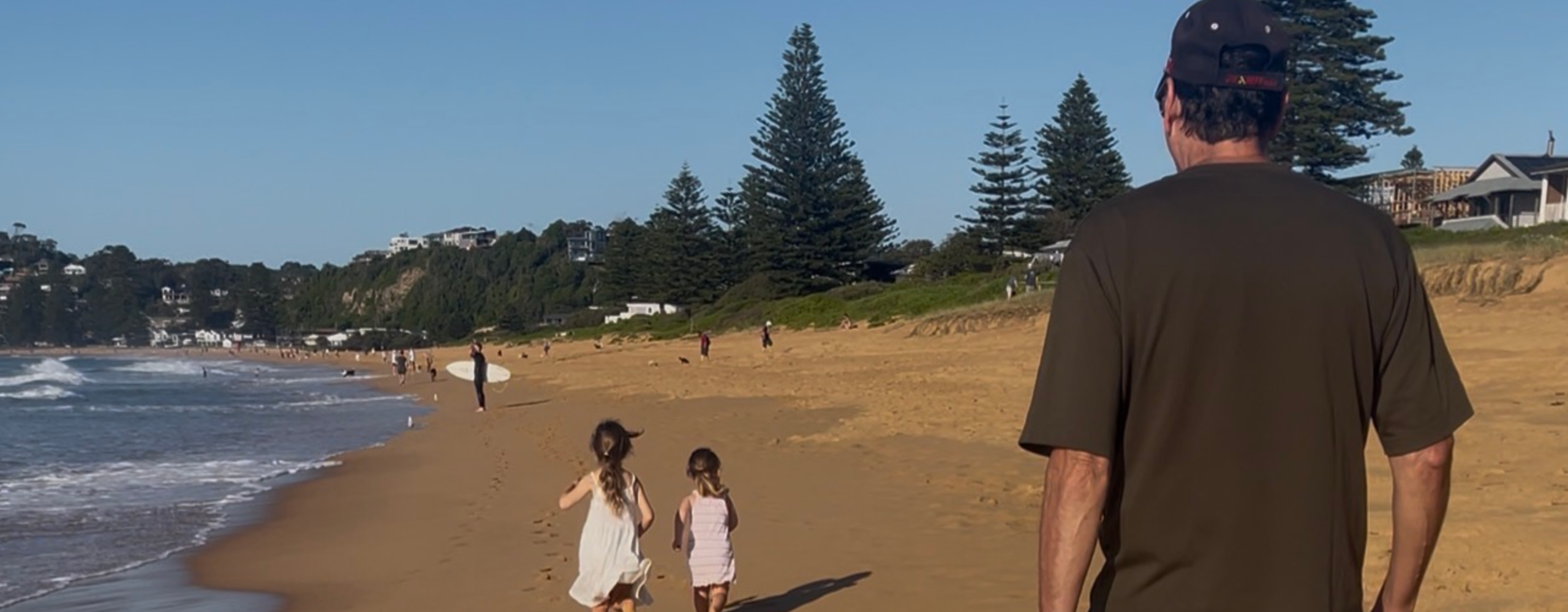
Every one of us is leaving a legacy. Our children, grandchildren, friends, neighbours, and church family are watching how we respond when life becomes difficult.
Will they remember people who trusted God only when life was easy?
Or will they remember people who continued to worship in the midnight hours?
That’s the legacy of faith.
Not perfect faith.
Not fearless faith.
Simply a steady, growing confidence that Jesus is faithful, even when life is confusing.
Today, whatever you may be facing, remember this: God has not forgotten you. He is still working behind the scenes. He is still writing your story. He is still worthy of your trust.
And as you continue walking with Him, you’ll discover that faith does far more than help you survive difficult seasons. It produces peace when circumstances are uncertain, strength when you feel weak, and hope when everything around you seems dark.
May we be people who walk by faith and not by sight. And may the legacy we leave behind always point others to the faithfulness of Jesus Christ.
Leave a Reply